
Property care advice
Protecting your home exterior from weather damage
Look at the parts of the exterior that repeatedly get wet after rain. A stain near a downpipe, drip at a seam and pooling on paving each provide different clues.
- Loose fittings
- Repeated wet patches
- Damaged gutter joints
What should I check first?
Note where water first appears and whether an earlier repair or clearance made any difference. Keep any photos taken from ground level and say when you took them. If the issue is only visible in rain or when the property is in use, explain what changes at that point.
Can I ask about a London or M25 address?
Call with the full postcode and the type of property. Tell us which part of the building or grounds is involved and whether access is shared. If the postcode is towards the edge of our coverage, we can confirm the address when you enquire.
What to look at first
Rain often reaches the same weak point more than once. After a storm, compare walls and paving near downpipes with areas farther away from the roofline. Make a note of loose connections or a patch that takes longer to dry. If the marks are below an upper-storey window, identify where the gutter and downpipe sit in relation to it. Keep observations from dry days separate from what you saw in the rain. This helps a contractor understand whether you are describing a persistent stain, a new leak or active overflow.
Loose fittings
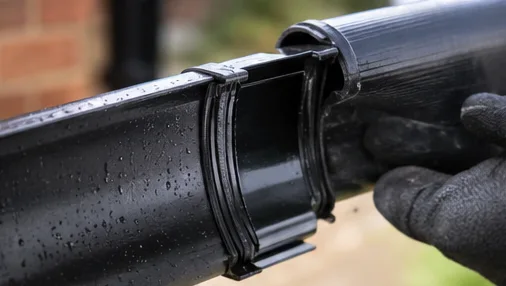
Identify the exact location and describe what you can see from a safe position. A problem on the street side is often easier to explain if you give the nearest entrance or window as a reference. Tell us if the area is shared with another occupier or only visible from a neighbouring property.
Repeated wet patches
Say how long you have noticed the issue and whether it has changed since you first saw it. If someone has already looked at it, pass on what they found and which parts they could reach. That gives us a starting point when we discuss the work.
Damaged gutter joints
When more than one area is involved, say which one you want dealt with first and whether the others need a separate enquiry. If access depends on a tenant, neighbour or site manager, let us know who needs to be involved before a date is agreed.
Which information helps?
| Enquiry | Where to start | Useful detail |
|---|---|---|
| loose fittings | Identify the affected area | A photo or a description from ground level |
| repeated wet patches | Explain what has changed | When you first noticed it and whether it recurs |
| damaged gutter joints | Say who can provide access | A gate, shared entrance or on-site contact |
How to plan the next step
Describe what you can see
Note where water first appears and whether an earlier repair or clearance made any difference. If you have images, label them front, rear or side so we can connect each image with the correct part of the property. Mention earlier visits or changes to the building if they affect the area you are asking about.
Confirm how we can reach it
Check whether someone must open a shared door or gate. Mention steps, narrow passages, parked vehicles or obstacles below the affected area. Where a path is used by other residents or customers, tell us when it is busiest and who can help coordinate access.
Agree what the visit is for
We discuss the area you want looked at and what you have noticed. If there is another issue nearby, identify it separately so that both can be considered. If work needs the agreement of another owner or manager, tell us who will confirm the arrangements and receive any findings.
Homes, shared buildings and commercial properties
Access and responsibility can differ even between two buildings on the same street. Tell us who controls the space in front of the work and whether there is another route available. For loose fittings, start by identifying which elevation, entrance or outdoor area is affected.
Houses and gardens
A rear area can be difficult to reach where the side passage is narrow or gated. Mention a conservatory, extension, steps or changes in level. If the route passes through the property, agree that with the occupier before booking.

Flats and terraces
Check whether the relevant wall, roofline or grounds are shared. A tenant may know where the problem appears while the owner or managing agent controls access. Let us know who is the point of contact for each part of the arrangement.

Commercial premises
Tell us which entrance or part of the site is involved. If the premises will be open, explain whether staff, customers or deliveries use the same area. Identify who can meet us and what times are practical for the site.
Property access at a glance
| Property | Access to discuss | Who to speak to |
|---|---|---|
| House or garden | Side gate, steps or access through the property | Occupier or owner |
| Flat or terrace | Communal yard, passage or shared entrance | Owner, resident or managing agent |
| Commercial property | Opening hours, delivery routes and parking | Site or facilities contact |
Signs to mention when you call
Look at the parts of the exterior that repeatedly get wet after rain. A stain near a downpipe, drip at a seam and pooling on paving each provide different clues. If you already have a clear picture of the affected area, check whether it also shows the surrounding features. A drain, door, boundary or change in level can help locate the problem. Where the issue is easier to see at certain times, say what was happening when you noticed it. Keep a record of any access restrictions that would matter on the day.
When it happens repeatedly
Make a note of when repeated wet patches became noticeable and whether it changes in wet weather, during normal use or after work nearby. Point out any particular window, doorway, fitting or boundary next to it. A dated photo helps if the condition has changed since you first noticed it.
When more than one area is involved
Explain whether the concerns appeared together or at different times. Give each location separately, especially if different people can provide access. If the reason for the issue is unclear, describe what you see and what happened before it appeared.
What to record before enquiring
| What you notice | What to tell us | What to prepare |
|---|---|---|
| loose fittings | Where it is and when you first noticed it | A location or a photo |
| repeated wet patches | Whether the issue recurs | Dates or weather conditions |
| damaged gutter joints | Which areas or people are affected | Access details and a named contact |

Gutter cleaning across London and the M25
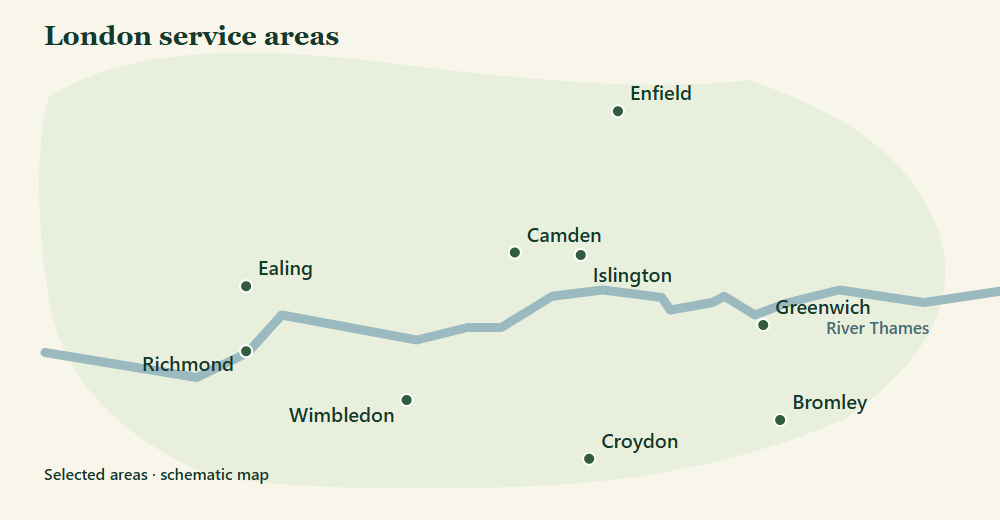
We cover properties across London and the M25 area. These are examples from our published service areas. When you enquire, give the full postcode so we can confirm the address and discuss access. If you manage several properties, have the address and contact for each site to hand.
What customers say
The whole process was smooth and professional
Emily S., Enfield
Quick, professional and friendly.
James R., Camden
very reassuring!
Priya M., Wimbledon
The team arrived on time
Sarah T., Clapham
Excellent value for money
Tom H., Richmond
Fast, clean and efficient.
David L., Croydon
Before arranging a visit
Check below the gutter as well as at the roofline. Repeated splashes can leave a mark where water lands, while the source may be above or to the side. A photo taken in dry weather can show the fittings clearly. Another taken during rain can show the route water takes before it reaches the ground. A clear enquiry identifies the area, who can give access and the outcome you want to discuss. Keep details for separate addresses apart so that photos and instructions are associated with the right property. If there is another contractor or resident involved, decide who will be available to answer questions about the site. Include any relevant access restrictions. Include the date if you have it. Tell us if the location is shared. Use separate photographs for each affected area. Keep the address with any photographs you send. Mention any changes since you last looked at it. Photograph the affected area from a safe position outside. Start with a clear description of loose fittings at the address. If you are also concerned about repeated wet patches, explain where it is.
- Give the full postcode and property type
- Describe the affected area and any restrictions
- Confirm who can approve and provide access
- Tell us what needs to be dealt with first
Questions before booking
Can I get in touch if I am unsure about loose fittings?
Yes. Note where water first appears and whether an earlier repair or clearance made any difference. If you can safely take a photograph, include a wide view as well as a detail so it is clear which part of the building or grounds you mean.
What if a neighbour controls access?
Speak to them before the visit and ask whether the affected area can be reached from their property. Tell us about any agreed times, locked gates or restrictions. If permission is still being arranged, mention that when you enquire.
How should I describe a recurring problem?
Say how often you notice it and whether rain, seasonal changes or the use of the property make it more obvious. Include any earlier work and the approximate date it was done. If you only have one photograph, say when it was taken.
Can I ask about several parts of the property?
Yes. Describe each part separately and put the most important first. Use a landmark such as the front door, side gate or rear extension to show which area you mean. Mention when access needs to be arranged with different people.
Do I have to be at the property?
Tell us whether a tenant, site manager or another person can meet us. Agree who can grant access and who should receive any findings. If we need to reach part of the property through a locked or shared entrance, discuss that before the appointment.
What if the area is hard to see?
Give the side of the building and its approximate height or distance from an entrance. Describe obstacles and what you can see safely from ground level. We can discuss access and what may be possible to inspect during a visit.
Discuss your property
Note where water first appears and whether an earlier repair or clearance made any difference. You can call Monday to Saturday or use the enquiry form. Include your preferred contact details and identify which address the enquiry concerns. If a recent change has made access harder, mention it before arranging the visit.
Details to have to hand
| Detail | What to include |
|---|---|
| Address | Full postcode and type of property |
| Affected area | Location and what you can see |
| Access | Gate, entrance or person who can meet us |
| Enquiry | What you need to discuss and how to reach you |

Gutter cleaning, repairs and camera surveys for homes and businesses across London and the M25.